
P. Pilgrim
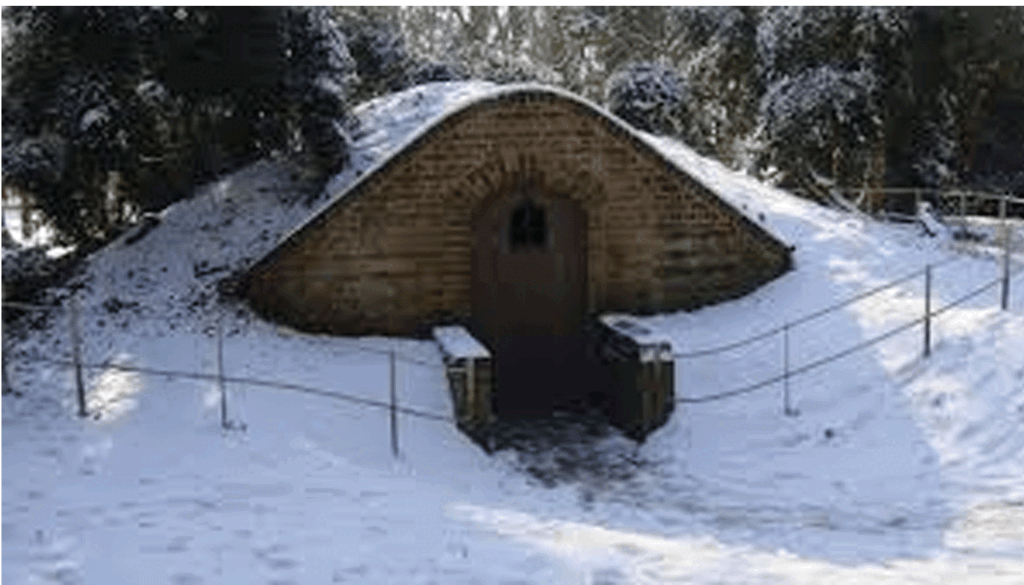
Before refrigerators, people used ice houses to preserve their food. Some were underground chambers, usually man-made, close to natural sources of winter ice such as freshwater lakes. Ice houses had thick walls, no windows and a tightly fitted door. In winter, when streams and lakes were frozen large blocks of ice were cut and brought to the ice houses and covered with sawdust. Often the ice would last well into the summer. Ancient writings from Syria and China have been discovered which showed that ice houses had been in use from 1780 BC. The King of Mari, Zimri-Lim, in the northern Mesopotamian town of Terqa, his writings tell of the first icehouse that “never before had any king built”. In China, archaeologists have found remains of ice pits from the 7th century BC, and references suggest that these were in use around 1100 BC.
The more modern ice houses in Europe became popular in the 1600s. James I, of Britain, commissioned the first ice house in 1619 in Greenwich Park and another in Hampton Court in 1625–6. Years have passed though the principles have remained the same. The houses are filled with ice blocks in the wintertime and covered in sawdust to retain the cold.
The story is told of one man who lost a valuable watch while working in an ice house. He searched diligently for it, carefully raking through the sawdust, but didn’t find it. His fellow workers also looked, but their efforts to, proved futile. A small boy who heard about the fruitless search slipped into the ice house during the noon lunch hour and soon emerged with the watch. Amazed, the man asked him how he found it. The boy replied ‘I closed the door, lay down in the dust and kept very still. Soon I heard the watch ticking’.
This teaches a valuable lesson that sometimes life can be so noisy that we miss the voice of God. The Bible speaks of an occasion in the life of the prophet Elijah. The prophet was running away from the threats made against him by the Queen Jezebel. She had tried to kill him. So the prophet fled and ended up in Mount Horeb. He was very afraid and believed that there were no other believers alive, that he was the only one left alive. God told him to go and stand at the mouth of the cave and to talk with him. The story continues, ‘A great wind developed strong enough to break in pieces the rocks, but the voice of God wasn’t in the wind. Then an earthquake happened but still no voice from God. Then fire came but still no voice’. The bible says “And after the earthquake a fire; but the LORD was not in the fire: and after the fire a still small voice.” in 1Kings chapter 19:12. In some occasions all the busyness of life has to be set aside to be able to hear the voice of God. Many people will question if the living God still speaks today. But maybe the question should be whether we are being still enough, and quiet enough to here God speak. The young lad heard the ticking only when everything else has gone quiet, and he was alone and attentive to hear the sound. Revelations chapter 3 verse 20 says ‘Behold, I (Jesus Christ) stand at the door, and knock: if any man hear my voice, and open the door, I will come in to him, and will sup with him, and he with me’. Will you hear his voice today? (pilgrimway101@yahoo.com)